

The backpack is packed. The new shoes are by the door. But your child cannot sleep, will not eat breakfast, and has spent the past three days asking if they really have to go. Sound familiar?
Back to school anxiety is one of the most common concerns parents bring to therapy every August. And it makes sense. Starting a new school year means new teachers, new social dynamics, new schedules, and for many kids, a whole season of unknowns arriving all at once.
The good news: most back to school anxiety is normal, manageable, and temporary. The better news: there is a lot you can do to help. This article walks you through what back to school anxiety actually looks like, why it happens, and what the research says about helping your child feel calm, confident, and ready to walk through that door.
Is Your Child’s Anxiety More Than Just First-Day Nerves?
If back to school stress has been building for weeks, is affecting sleep or appetite, or your child is refusing to go, our therapists at Aspen Counseling Services are here to help. We work with children, teens, and families. Call or text us at 801-449-0017 to schedule an initial assessment for your child.
What is Back to School Anxiety?
Back to school anxiety refers to the worry, dread, or distress that children and teenagers experience as the new school year approaches. It can show up weeks before school starts or spike on the morning of the first day. For most kids, it settles down within the first few weeks once routines become familiar and social connections are reestablished.
According to the Child Mind Institute, even children who are generally easygoing can experience a surge in anxiety at the start of a new school year. Kids who already tend toward anxiety, or who are entering a major transition like kindergarten, middle school, or high school, often feel it more intensely.
Back to school anxiety is not a formal clinical diagnosis on its own. But it can be a sign of an underlying anxiety disorder if the symptoms are severe, persistent, or significantly interfering with your child’s daily life. We will talk more about where that line is later in this article.
Why Do Kids Get Anxious About Going Back to School?
Back to school anxiety almost always comes back to one thing: uncertainty. The brain is wired to treat the unknown as a potential threat, and a new school year is full of unknowns. Will my teacher be nice? Will I have anyone to sit with at lunch? What if I cannot find my locker? What if I am behind in math?
For younger children, separation anxiety is often the main driver. Being away from a trusted caregiver for hours at a time is genuinely hard for small kids, and starting school or returning after a long summer can reignite that fear of separation.
For older children and teenagers, the anxiety tends to be more social. Will I fit in? What do people think of me? Did my friend group change over the summer? Academic pressure is also a major factor for kids in Utah Valley, where high expectations around school performance are part of the community culture.
The National Institute of Mental Health notes that anxiety disorders are among the most common mental health conditions in children and adolescents, affecting roughly one in three young people at some point during childhood or adolescence. Back to school season is one of the most reliable triggers for anxious kids because it packs so many stressors into a short window of time.
Signs of Back to School Anxiety in Children

Every child shows anxiety a little differently. Some kids are vocal about their worries. Others act out, shut down, or develop physical symptoms that feel very real even when no medical cause can be found. Here are some of the most common signs to watch for:
In younger children (ages 5 to 10):
- Clinginess or increased separation anxiety
- Complaints of stomachaches or headaches before school
- Nightmares or trouble sleeping
- Crying, tantrums, or meltdowns around school topics
- Regressive behaviors like bedwetting or thumb sucking
- Refusing to talk about school or shutting down when it comes up
In order children and teenagers (ages 11 to 18):
- Increased irritability or mood changes as school approaches
- Withdrawal from friends or activities they normally enjoy
- Difficulty sleeping or sleeping too much
- Excessive worry about grades, social situations, or performance
- Avoidance of school topics or school-related tasks like supply shopping
- Physical complaints with no-clear medical cause
- School refusal or frequent requests to stay home
It is worth noting that some level of nervousness before a new school year is completely normal and healthy. A little anxiety can actually motivate kids to prepare and adapt. The concern is when that anxiety becomes overwhelming, constant, or starts interfering with sleep, eating, friendships, or daily functioning.
Is Back to School Anxiety a Sign of an Anxiety Disorder?
For most children, back to school anxiety is situational. It shows up around transitions, eases once routines are established, and does not significantly disrupt daily life. That is normal.
But for some children, the anxiety does not ease up. If your child’s back to school stress is still intense several weeks into the school year, if it is escalating rather than improving, or if it is affecting their ability to attend school, maintain friendships, or function at home, it may be pointing to something deeper.
The American Psychological Association identifies several anxiety disorders that commonly first appear in childhood, including generalized anxiety disorder, separation anxiety disorder, and social anxiety disorder. All of these can intensify significantly around back to school season.
Cognitive behavioral therapy (CBT) is one of the most well-researched and effective treatments for childhood anxiety. It helps children identify anxious thought patterns, challenge those thoughts, and gradually build tolerance for the situations they fear. If you are noticing signs of a deeper anxiety disorder, early support makes a meaningful difference.
When Anxiety Is More Than a Phase
If your child’s back to school anxiety is persistent, intensifying, or starting to affect school attendance or daily life, that is worth exploring with a professional. At Aspen Counseling Services, we specialize in children’s mental health and evidence-based anxiety treatment for kids and teens across Utah Valley. Visit our Anxiety Treatment page to learn how we can help your child feel more confident this school year.
How to Help Your Child With Back to School Anxiety

There is no single fix for back to school anxiety, but there are strategies that consistently help children feel more prepared, more grounded, and less overwhelmed. These are approaches our therapists recommend to the families we work with every August.
1. Start the Conversation Early
A few weeks before school begins, open a low-pressure conversation. Ask your child what they are looking forward to and what they feel nervous about. Let them share without jumping to fix or minimize. Hearing “I know this feels scary and I am here with you” is often more helpful than “You will be fine.” Validating the feeling helps your child feel less alone with it, which makes it easier to move through.
2. Re-establish Routines Before School Starts
Start adjusting bedtimes and wake times about two weeks before school begins and reintroduce a morning routine and regular mealtimes. When the routine is already familiar before the first day, there is one less thing for the brain to process as new. The Centers for Disease Control and Prevention highlights consistent routines as a key protective factor for children’s mental health during times of transition.
3. Do a Practice Run
Walk through the school together before the first day. Find the classroom, the bathroom, and the cafeteria. If the school allows it, introduce yourself to the teacher in advance. Reducing the physical unknowns significantly reduces the anxiety around them.
4. Help Them Build a Plan for Hard Moments
Ask your child what the hardest part of the first day will be, then help them make a concrete plan for that moment. Children with anxiety feel more in control when they have a script for the situations they fear most. A plan does not guarantee the hard moment will not happen. It just means your child is not walking in empty-handed.
5. Watch What You Say Around School
Kids absorb parental anxiety quickly and quietly. Try to keep conversations about school warm and curious rather than evaluative or anxious. If your child asks whether school will be hard, honesty matters: “Some parts might feel hard. And I know you can handle hard things.”
6. Avoid Accommodation That Reinforces Avoidance
There is an important difference between supporting a child through anxiety and accommodating it in ways that make it stronger. Letting your child stay home every time they say they feel sick sends the unintended message that the situation is too dangerous to face. Mass General Brigham’s child psychiatry team calls this “supportive scaffolding”: being the steady presence that holds a child up while they build their own tolerance for discomfort.
7. Praise Effort and Courage, Not Just Outcomes
When your child gets through a hard moment, name it. “You were so nervous this morning and you walked in anyway. That took real courage.” Focusing on the brave action builds the belief that they can handle hard things, which is exactly what anxious kids need to develop.
8. Take Care of the Basics
Sleep, nutrition, movement, and connection are the foundation of emotional regulation for children. Protect sleep schedules, keep meals regular, and make time for physical play and outdoor time. These are not luxuries. They are the infrastructure that keeps a child’s nervous system stable.
School Refusal: When Back to School Anxiety Becomes a Bigger Problem
School refusal is when a child consistently refuses to attend school or has extreme difficulty doing so, despite efforts from parents and the school. It is different from occasional reluctance. School refusal often involves daily distress, significant physical complaints, and escalating conflict around attendance.
School refusal can be driven by anxiety, depression, a traumatic social experience, or a learning challenge that has gone unaddressed. Whatever the cause, it tends to get harder to address the longer it goes on. The longer a child stays out of school, the more their confidence in their ability to return erodes, and the more the anxiety builds.
If your child is refusing school or making it extremely difficult to get there consistently, this is a good time to reach out for professional support. Our therapists work with children and families navigating school refusal using evidence-based approaches that help kids gradually rebuild their ability to attend while addressing the underlying anxiety or distress.
Do Parents Experience Back to School Anxiety Too?
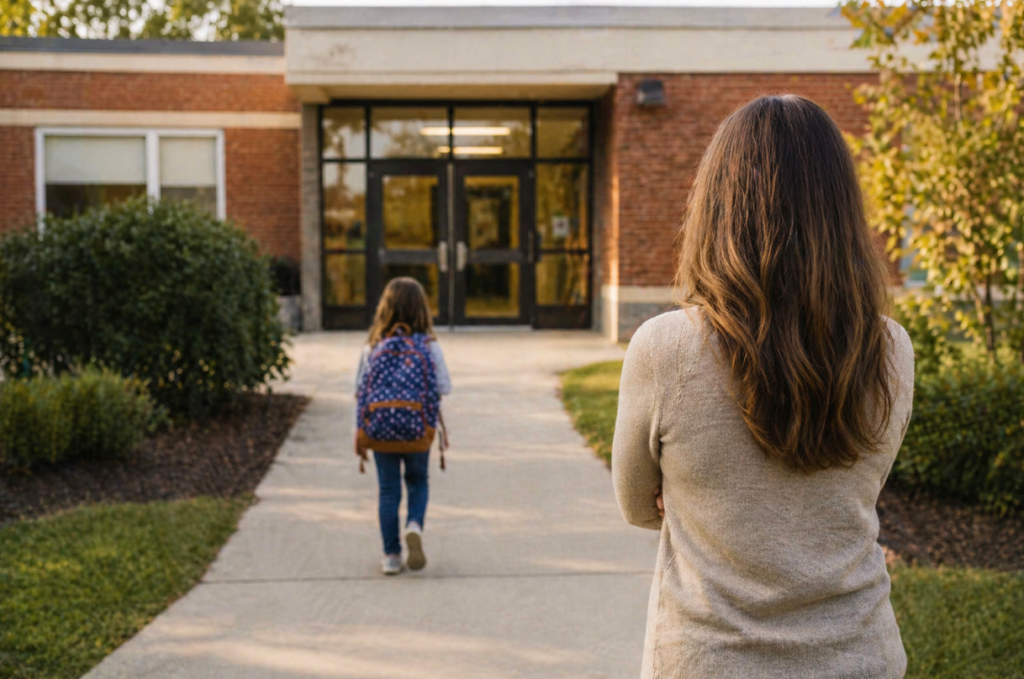
Yes. And it is more common than most parents admit.
For parents, back to school season can bring its own wave of stress. There is the logistical pressure of new schedules, school supplies, childcare arrangements, and the end of summer flexibility. For parents who work, it can mean navigating a major shift in their own routines. For parents of kids with anxiety, learning differences, or social struggles, there is often a deep, quiet dread that this year might be as hard as the last one.
Some parents also experience grief around their child growing up, particularly around milestone years like kindergarten, middle school, or senior year. These feelings are valid. They deserve space.
The challenge is that children are remarkably attuned to parental stress. If you are anxious about school starting, your child will feel it, even if you say nothing. This is not a reason to perform false positivity. It is a reason to tend to your own emotional state with the same care you bring to your child’s.
If the back to school season consistently brings a level of stress or anxiety that feels hard to manage, individual therapy can be a genuinely helpful place to work through it. You do not have to be in crisis to deserve support.
When to Seek Professional Help for Back to School Anxiety
Here are clear signs that it is time to reach out to a mental health professional:
- Your child’s anxiety about school has been building for several weeks and is not improving
- Physical complaints like stomachaches or headaches are happening most mornings before school
- Your child is refusing to attend school or making it extremely difficult to get there
- Sleep is consistently disrupted in the weeks surrounding the start of school
- Your child’s anxiety is affecting their friendships, eating, or daily activities at home
- You have tried the strategies above and nothing has made a meaningful difference
- Your child is expressing hopelessness, extreme fear, or distress that feels out of proportion
Reaching out early is always the right call. Children’s mental health challenges are significantly more responsive to treatment when they are addressed early. Waiting until things reach a crisis point makes the path back harder for everyone.
Aspen Counseling Services Is Here for Your Family

Back to school anxiety is real. It is also very treatable. At Aspen Counseling Services, we have been supporting children, teens, and families across Utah Valley for over two decades. Whether your child is dealing with first-day jitters that have grown into something more, or you are navigating school refusal and do not know where to turn, our team is ready to help.
We offer children’s mental health services, cognitive behavioral therapy, and individual therapy for children, teens, and adults. You can also browse our mental health resources for additional support and guidance.
Ready to Get Your Child the Support They Deserve?
Aspen Counseling Services has been voted the number one counseling center in Utah Valley for nine consecutive years by Readers Choice Awards. We serve families across Highland, Provo, Sandy, and throughout Utah with in-person and telehealth options. Call or text us at 801-449-0017 or click below to connect with our team.
Get Support for Your Child Today
Frequently Asked Questions
What is back to school anxiety?
Back to school anxiety is the worry, dread, or distress that children and teenagers experience as a new school year begins. It commonly involves physical symptoms like stomachaches and sleep problems, and emotional symptoms like irritability or excessive worry. For most kids it is temporary, but for some it can signal a deeper anxiety disorder that benefits from professional support.
What are the signs of back to school anxiety in children?
Common signs include sleep problems, stomachaches or headaches before school, clinginess, crying, withdrawal from friends, irritability, school refusal, and excessive worry about grades or social situations. Younger children may show more physical and behavioral symptoms. Older children and teens may become more withdrawn or irritable.
How can I help my child with back to school anxiety?
Start conversations about school early. Reintroduce routines a few weeks before school begins. Do a practice run of the school building if possible. Help your child make a plan for the moments they are most worried about. Validate their feelings without dismissing them, and avoid accommodating anxiety in ways that reinforce avoidance. When anxiety is more persistent, professional therapy makes a significant difference.
Is back to school anxiety a sign of an anxiety disorder?
Not necessarily. Many children experience some level of anxiety at the start of a new school year. It becomes a concern when it is intense, does not improve after a few weeks, or significantly interferes with school attendance, friendships, sleep, or daily life. If you are unsure whether what your child is experiencing is typical or worth addressing, speaking with a therapist is a good starting point.
Do parents experience back to school anxiety too?
Absolutely. The logistical stress of new schedules, the emotional weight of watching a child struggle, and even the grief around children growing up are all real. Parents also tend to absorb and reflect their child’s anxiety. Taking care of your own emotional wellbeing is not separate from helping your child. It is part of it.